Togetherness: Unity in the Household of God

Sermon Manuscript
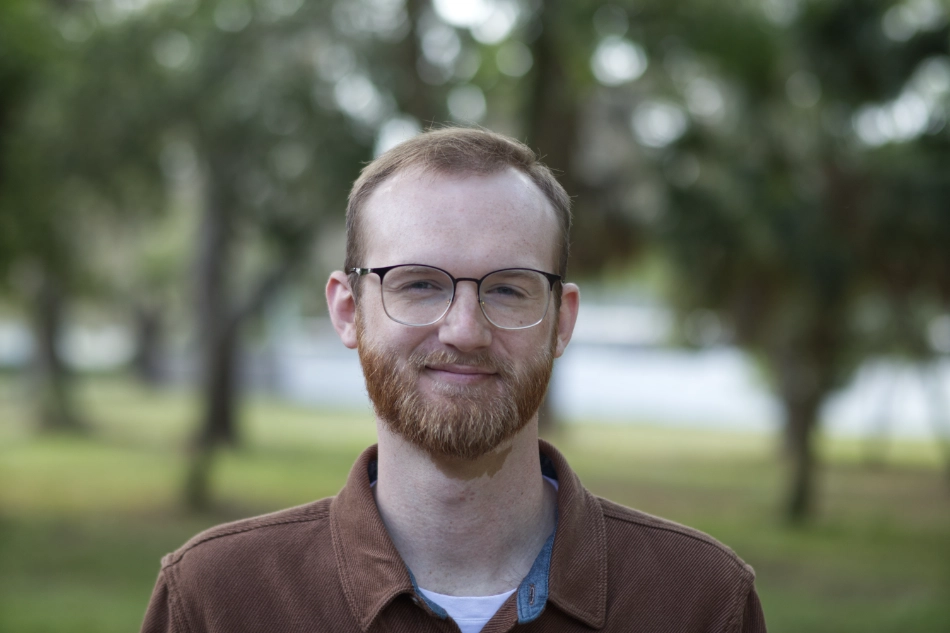
Good morning - I'm Fred Langer, one of the elders here at Orlando Grace Church.
With a show of hands, who has either heard me preach before or this is your first time hearing me preach? (The rest of you may get that on the way home…)
A bit about me:
I am still the most chronologically accomplished elder. I am still the most follicularly challenged elder. (Oldest and baldest)
I was born in Orlando and grew up in Winter Park. I met Barbara when we were 15 at Winter Park High School (go Wildcats). We have 2 beautiful daughters and a grandson and granddaughter.
I retired toward the end of last year after 40 years with AdventHealth. I was a cardiac critical nurse and instructor, then in clinical IT. I feel busier now than when I was working. After hearing me say this several times to people, Barb said, “Maybe because we’re older everything just takes longer to do.” Well that got me to thinking and I came up with a name 4 this apparent sense that time goes faster the older you get. I call it Age-Related Time Acceleration Syndrome (ARTAS).
Another milestone for us was: this past June, Barbara and I celebrated 50 consecutive years of marriage.
That’s enough about me.
We are closing out 2025, this is our last worship service of the year. Four days ago we had a beautiful Christmas eve service with a poignant sermon from Jim on the seldom talked about pain and suffering that’s part of the Christmas story. This is also part of the story for many of us at Christmas time, but God works through it for our good and his glory.
Last Sunday James Soper preached a wonderful sermon about the second advent.
Speaking of James Soper, I have a quick story: Many people may not know how talented he is, but one of his talents is singing. Two weeks ago, some of us attended a musical Christmas party and shared a time of singing carols and other Christmas songs around the piano at the Blakemores. James and I were sharing a songbook and were reading and singing the bass part to all the songs.
It was quite fun and festive.
When we came to Away in a Manger – it turns out there are two versions, allegedly one is American and one is British, and someone asked which was which. I blurted out “Well, I believe this is the British version.“
First – it was a brutal attempt at the accent. Secondly, I immediately realized that I had just mocked James, Amy, Florie, and Brooke. I apologized and they were gracious and waved it off, and I resisted any urge to do it again.
When our girls were small, I read all the Chronicles of Narnia and James Herriot books in a “British” accent. I always had this secret fear one of them would eventually hear someone from Britain speaking and say, “You’re British! You should hear my dad speak British. Go ahead, Dad!”
Well, today’s message is a follow-up to my first message in what I like to call the End of the Year series on Sanctification. In my sermon on December 31, 2023 we were focused on personal sanctification. Today we focus on the church as a family and sharing in each other’s sanctification. And at this biennial pace, we should wrap up the series when I am 107 years old.
OK, that’s the end of my attempt to break Jim Davis’s recent record of the longest introduction to a sermon.
Overarching Theme
Our overarching theme for today’s message is this:
God calls His people to grow together in holiness. Sanctification is not just individual transformation, but also family formation. We become increasingly Christ-like as a unified household of God.
But before we can dive in, we have to address something that may have already raised a question for many: What is the very first word in our passage? "Therefore." And what is the question we ask when we see the word "therefore"? "What is it there for?"
The word "therefore" at the start of verse 11 acts as an anchor. It ties everything Paul is about to say back to the glorious truth of verses 8 and 9 which reads, "For by grace you have been saved through faith. And this is not your own doing; it is the gift of God, not a result of works, so that no one may boast." This means that unity in the church flows directly from this free grace.
Since every one of us is saved purely by God’s grace and mercy, then no one has room to boast.
The ground is level at the foot of the cross.
- Adopted Together (Ephesians 2:11-13, 19)
Our first of three points for our topic of Togetherness: Unity in the Household of God is – we are adopted together.
Let ‘s read from the initial part of our passage again: “Remember that you were at that time separated from Christ, alienated from the commonwealth of Israel and strangers to the covenants of promise, having no hope and without God in the world. But now in Christ Jesus you who once were far off have been brought near by the blood of Christ.” And then verse 19: “So then you are no longer strangers and aliens, but you are fellow citizens with the saints and members of the household of God.”
While the actual word “adopted” doesn’t appear in those verses, it is used in chapter 1 verse 5: “he [God] predestined us for adoption to himself as sons through Jesus Christ, according to the purpose of his will”. Also, in Romans 8:15: “ For you did not receive the spirit of slavery to fall back into fear, but you have received the Spirit of adoption as sons, by whom we cry, “Abba! Father!” There are other examples in Romans and Galatians, and many more where adoption is implicit.
God doesn’t just save us into individuality, he adopts us together into His household. I know several people here whose life story begins with being adopted. While everyone's story will be different, it's not uncommon for someone who is adopted to wonder if their parents love them like their own biological child.
Let me share something with you that Barbara shared with me last week: Barb loves ancestry. Through her years of research she found her long lost aunt, someone the family had heard about but knew nothing of. Through her research, Barb found her and now has a wonderful relationshiop with her - a sweet story for another time.
Barb loves shows about ancestry and genealogy and adopted people finding their birth families. She told me of a recent episode about a family where the father said “We don’t look at our biological chldren being any different from our adopted children. We love them all just the same. They are all simply our children and we are one family.” That is exactly what Paul means in these verses.
So, we have been adopted together as family members into the household of God. We know that He sees us and loves us just as he sees and loves his own son, Jesus Christ. How should this family then live? Well, we should be Attentive Together, which is our second point.
- Attentive Together (Ephesians 2:14-18)
Being Attentive Together means attending to one another. This will be the longest section as this is where most of the practical application lies.
First, let’s read verses 14 through 18 again: “ For he himself is our peace, who has made us both [Jewish believers and Gentile believers in the original context] one and has broken down in his flesh the dividing wall of hostility by abolishing the law of commandments expressed in ordinances, that he might create in himself one new man in place of the two, so making peace, and might reconcile us both to God in one body through the cross, thereby killing the hostility. And he came and preached peace to you who were far off and peace to those who were near. For through him we both have access in one Spirit to the Father.
In these verses Paul speaks of peace, unity, reconciliation, and tearing down the walls of hostility. These all apply to relating to one another as a family.
We all need to grow in Christ, to “work out our salvation with fear and trembling” (Philippians 2:12) through the sanctifying work of the Holy Spirit. But consider this: Our salvation, specifically our justification, is personal. God saves us, he regenerates our heart, we respond through faith with belief and repentance, but our sanctification is never exclusively private.
As Tim Challies puts it, “Sanctification is a community project.”And another author reminds us, “Holiness isn’t just Jesus and me; it’s us in Christ.” In a culture that worships independence, this is radical.
The gospel calls us out of isolation into family. True sanctification - the shaping of Christ-likeness - happens as we live, and serve, and love side by side with brothers and sisters God has placed around us.
But the human heart loves to build walls. In Paul’s day, those walls were religious; today, they’re mainly cultural. They might be political affiliation, educational background, economic status, neighborhood, lifestyle choices, but the human impulse remains the same: we build walls.
Jesus did not come to decorate those walls He came to demolish them. Our holiness is revealed right there - in how we treat those who are different. Do we rebuild these walls Christ has torn down, or do we live as one people under one King?
In today’s divided world, this unity we strive for is a living testimony. True sanctification means choosing fellowship over comfort, humility over pride, and grace over preference - because that’s how the church displays the divine peace and reconciliation of Christ.
And speaking of church, the family of God is meant to gather, as we are gathered today. Scripture calls us to “not neglect meeting together, as is the habit of some” as Hebrews 10:25 says. Also, “ to devote ourselves to teaching, fellowship, and prayers” as in Acts 2:42. The household of God is a worshiping people, gathering together regularly to hear the word, sing, pray, and share life.
Speaking of “gathering together regularly”, Barb and I were members of a local bible-believing and teaching church. Around 2010, for a number of reasons, some were physical constraints, we just stopped attending church. We hadn’t turned away from our faith, but over those years we suffered from the spiritual and social isolation from the family of God.
There’s a book, usually out on our resource center shelf, but currently sold out, titled “The Great Dechurching” - co-authored by a guy named Jim Davis. He and Mike Graham produced a seminal work on the phenomenon of Christians who stopped attending church. We were one of those statistics.
In 2017, we were invited to visit OGC by a dear friend and began attending. We found love and acceptance, a place to worship and fellowship, a place to learn and grow, and a place to serve and contribute. In God’s providence, we found our local household of God, became members, and are blessed to partake and contribute with our family members here.
So here at OGC, we believe every Christian should have a church home. If you are not a member here, you are warmly invited to our Next Steps Lunch after the second service on Sunday, January 11. And if you want to go deeper and learn more about OGC and what membership at OGC actually looks like, join us for the Discover OGC class from 4:00 to 8:00 PM on Sunday, January 25, and Sunday, February 1.
Now, back to our regularly scheduled sermon.
Pastor Jim has regularly and often said that at OGC we do want to grow, but we want to grow well. We don’t want to be a mile wide and an inch deep. While the admonition in Hebrews 10:25 to “not neglect meeting together” is referencing corporate worship, it certainly has other applications. At OGC we provide and encourage participation / engagement in the following opportunities:
Community Groups (small home groups) – These are the heartbeat, the glue of our church family. They are more intimate and personal. We are able to share more deeply and get to know each other more fully. We study together and pray specifically for one another, and we develop long lasting friendships. For more information, check our website or contact Amanda Walton.
Formation groups – These are for 2 or 3 people of the same gender. There is opportunity for even deeper and more personal sharing. We will have a new, guided curriculum of study (currently under development) for next year. For more info contact Ragan Bartholomew.
Discipleship – This is a 1:1 man to man or woman to woman relationship allowing a deep dive into growth toward Christ-likeness. Discipleship requires strong commitment and accountability. The relationship built on: honesty, vulnerability, and confidentiality.
All of these build deeper roots so we as a local household of God can grow a mile wide and two miles deep. All of these help us to be Attentive Together and build unity among one another.
One Another Commands
Speaking of one another, there is a veritable plethora of passages in the new testament with the explicit phrase "one another" and more verses with “each other” or phrases that mean the same. In many of these verses Jesus and the apostles give us specific commands about how to treat each other. They're central to who we are as God's people. They tell us how to love, serve, forgive, and build one another up. Together, they paint a picture of what a healthy church looks like.
We are only going to look at 3 of the “one anothers” briefly today, not all of them.
Love One Another – At least 10 verses use the phrase “love one another. Here is John 13:34-35: “A new commandment I give to you, that you love one another: “just as I have loved you, you also are to love one another. “By this all people will know that you are my disciples, if you have love for one another.” [3 “love one anothers” in just 2 verses]
Here are a couple questions to consider:
- Is there a brother or sister in Christ with whom our love for one another is strained?
- Who do I need to repent to and ask forgiveness from?
- Or who needs to know that they have hurt me?
Restoring relationships is vital for the sanctification of both parties and for the spiritual health of the household of God.
Welcome One Another (Romans 15:7) – “Therefore welcome one another as Christ has welcomed you, for the glory of God.” I Have two points for this one.
- We should receive each other with open arms: Just as Christ receives us - regardless of our background, failures, or differences – we are called to accept and embrace fellow believers.
- We should create a spirit of belonging: In the church, this means making everyone feel valued and at home, not just those who are similar to us or whom we naturally get along with. Our welcome should mirror the unconditional acceptance and grace that Jesus shows us.
Here is another question: “Are there people in our church that I avoid, when the gospel is actually calling me to lean in to those relationships?” Similarly – who are the people around me I don’t even know yet?
Here is a suggestion: Get to know people you don’t know. Meet someone new. For an extrovert – no problem, for an introvert – you’ll need to step out of your comfort zone. Grabbing lunch together after the worship service is a great kickstart to a new relationship.
Show Hospitality to One Another (1 Peter 4:9) “Show hospitality to one another without grumbling.”
The Greek word used in the NT for hospitality is Philoxenia (love of strangers). As John Piper teaches, biblical hospitality is not merely "entertaining" by having friends over who will invite you back. It is the strategic and affectionate welcome of the outsider, the stranger, and those who cannot repay you.
Tim Keller often described hospitality as the physical demonstration of the gospel. He taught that spiritually, we were all "strangers and aliens" (Ephesians 2:19) whom God welcomed in Christ. Therefore, when we offer hospitality, we are merely re-enacting what God has already done for us.
Now we may or may not know yet if a stranger is a believer – but that doesn’t matter. We show hospitality.
There are many more One Anothers with calls to action like:
- Exhort one another
- Serve one another
- Encourage
- Pray for
- Live in harmony
- Teach and Admonish
- Be Kind, Tenderhearted, Forgiving
- Clothe yourselves with Humility
- Seek to do good
- And more…
These are what binds us together as God's family. Not just Sunday mornings, but the way we treat each other every day. When we do these things, Christ's love becomes visible to everyone watching.
Awaiting Together (Ephesians 2:19-22)
Our final point is Awaiting Together. Paul concludes this passage with a vision of active hope. He shifts his language to that of construction and architecture. Here are the final verses of the passage, verses 19-22, and listen for the various construction terms he uses: “So then [therefore] you are no longer strangers and aliens, but you are fellow citizens with the saints and members of the household of God, “built on the foundation of the apostles and prophets, Christ Jesus himself being the cornerstone, “in whom the whole structure, being joined together, grows into a holy temple in the Lord. “In him you also are being built together into a dwelling place for God by the Spirit.” That’s 8 references to architecture or construction in those verses.
While we "await" the completion of this temple, we do not await passively. We participate in it. We cooperate with the Holy Spirit by investing in community, by serving one another, by holding one another accountable, and by spurring each other on toward love and good deeds – all those One Anothers. We work for that day when the temple is finally complete and the church stands before God in full splendor, completely sanctified.
Let me make a distinction or clarification here: This message this morning is being directed to fellow believers in the Lord, Jesus Christ. I want to take a moment to talk specifically to anyone here who does not yet know Jesus Christ as their lord and savior.
If this describes you - we are so glad you are here - and please know that NONE of us who are believers knew Christ until some point in our lives we heard – and responded to - the gospel message.
And the gospel is this: That God is holy and perfect, and we are not. We all have sinned and fall short of God’s glory (Romans 3:23). The wages of sin is death (Romans 6:23a) – meaning physical AND spiritual death, receiving the full wrath of God that we deserve.
But God in his grace and mercy sent Jesus to live a perfect sinless life on this earth, then die on a cross and receive God's full wrath for OUR sins in OUR place. Jesus paid a debt he did not owe - a debt we owed but could not pay.
This gospel message often falls on deaf ears and stone hearts. But as Jesus says in John 6:44, "No one can come to me unless the Father who sent me draws him". And God did draw each of us, and we believed and repented of our sin.
We believers have been given a new heart for following God and serving in his family. We have the unbreakable promise of eternal life with God forever - where there is no more pain, nor sin, nor sickness, nor sadness.
I love what Jesus says in John 10:27-30: "My sheep hear my voice, and I know them, and they follow me. I give them eternal life, and they will never perish, and no one will snatch them out of my hand. My Father, who has given them to me, is greater than all, and no one is able to snatch them out of the Father’s hand. I and the Father are one." In those verses Jesus proclaims his deity, and that he has given us eternal life that can never be taken away.
And you who do not yet believe - if anything you've heard this morning resonates with you, if you are thinking of questions you would like answered, even if you feel like things are hopeless and you don't know which way to turn - any of these thoughts or feelings could mean that God is beginning to draw you, to call you to himself. Please come find any of the elders or anyone here with a name badge and we would be glad to talk with you about this and what it looks like to be a Christian, a part of the household of God.
And remember, we Christians are still sinners, we are no better than anyone else. All of us, whether believer or unbeliever are created in the image of God. As RC Sproul said, “A Christian is just one beggar telling another beggar where to find the bread.”
Now church – those of us in the household of God - let me conclude by saying: sanctification is not about achieving personal perfection, nor is it reaching some individual spiritual milestone. It's about being built together into the dwelling place of God. This gives us a shared mission:
- every act of reconciliation,
- every choice to put a brother or sister's needs above our own,
- every moment of bearing with one another in love,
- every hidden act of service,
- every prayer whispered for someone else’s good,
- every time we forgive instead of resent,
- every patient conversation when we would rather walk away…
These are not peripheral to sanctification. They are the very substance of it. Jesus said, “By this all people will know that you are my disciples, if you have love for one another”. Let us love one another and grow together and let us strive for unity in the household of God.
Let's pray.