Why Do I Need the Church? (1 Peter 1:22-2:10)

Sermon Manuscript
There is a sentence that sounds completely normal to a 21st century American Christian that would have sounded totally nonsensical to Christians for most of the last 2000 years. And that sentence is: I love Jesus. I just don’t need the church.
To be clear, they aren’t saying they love Jesus, but they don’t like their church. Christians have complained about their churches for 2000 years. Paul and Jesus both had complaints about how certain churches were operating. These people also aren’t saying they have been hurt by the church. That has sadly also been true for 2000 years. They also aren’t saying they did attend and stopped. That’s not new either.
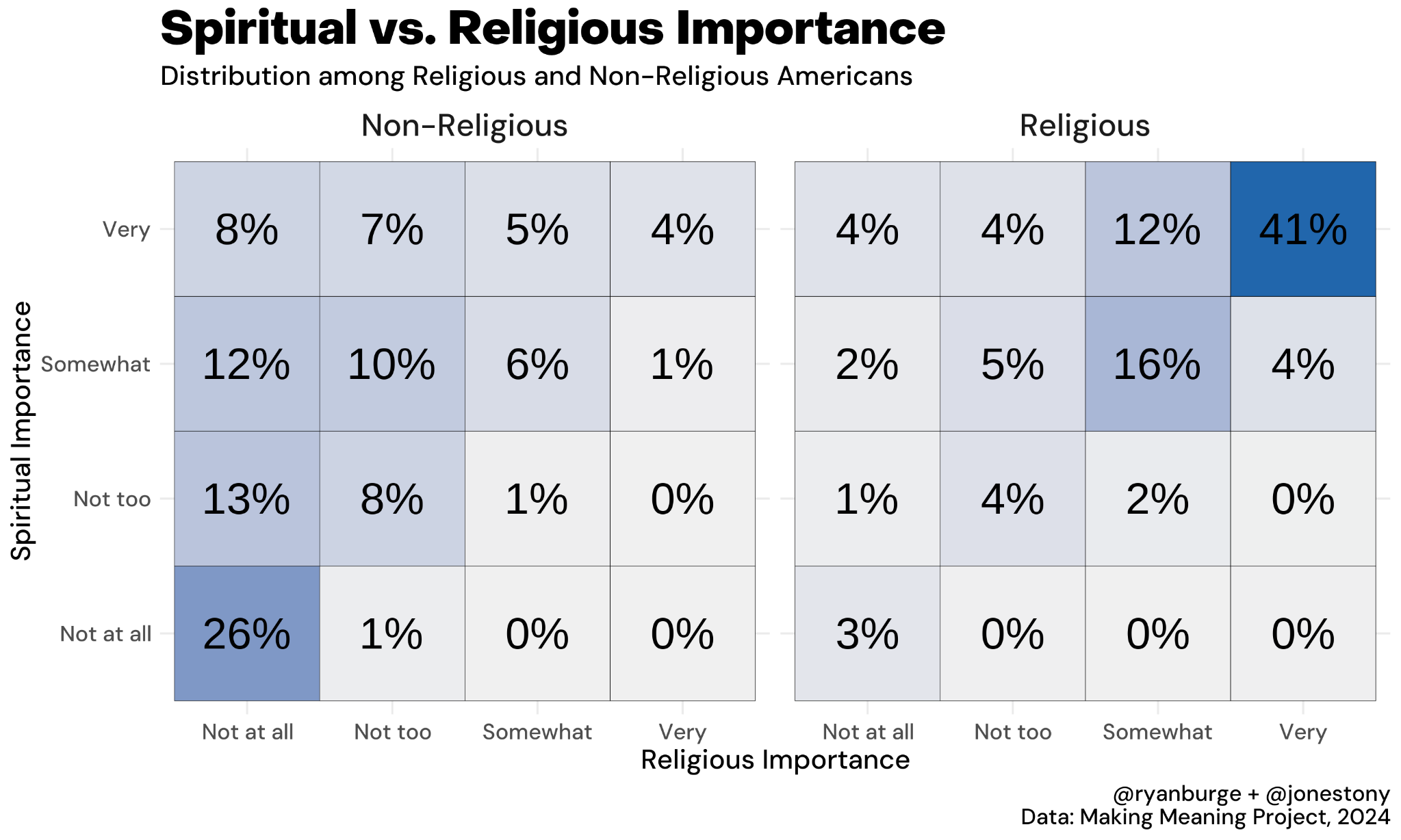
The novel part about this idea is that someone can detach themselves from Christ’s people and believe that nothing essential is missing from their relationship with Christ. Ryan Burge, who is arguably the foremost social scientist in religion today pretty much shows that the most spiritual people are also the most religious (which means they attend church) and the least religious (those who don’t attend) are also the least spiritual.
‹
So, not only can we see statistically that someone can’t really spiritually thrive without the church, this idea would have made no sense to Peter who is writing this letter. Listen to the way Peter describes a Christian. Love one another earnestly. You yourselves like living stones are being built up as a spiritual house. You are a chosen race, a royal priesthood, a holy nation, a people for his own possession. Once you were not a people, but now you are God’s people.
Jesus doesn’t just save us from our sin, He saves us into a people. You can’t really separate the two. We need people to love. We need people to grow with. And we need people to belong to. Peter is plainly saying that a stone by itself isn’t a house… and that is Peter’s answer to one of the most distinctly modern American assumptions about Christianity.
Advocates of this novel view of Christianity would say I listen to great preaching online. I read my Bible. I pray. I listen to Christian podcasts and music. I give money to good ministries. I have good Christian friends. So what exactly do I need the church for?
And even for those of us who attend church regularly, we can functionally think this way as well. Church can become one of those places where I go to help me with my relationship with Jesus. As if church is just another thing that exists solely to support my relationship with Jesus. But that is just not how Peter talks about the church.
Love one another earnestly…You yourselves like living stones are being built up as a spiritual house…You are a chosen race, a royal priesthood, a holy nation, a people for his own possession…Once you were not a people, but now you are God’s people.
Peter doesn’t seem able to separate what Jesus has done for me from what Jesus has made us. That’s because the gospel doesn’t merely reconcile us vertically to God. It reconciles us horizontally to one another. Jesus doesn’t just save us from something, He saves us into a people. And this passage answers a question we tend to not ask often enough: Why do I need the church? Peter gives us three answers.
- We need people to love 1:22-25
“Having purified your souls by your obedience to the truth for a sincere brotherly love, love one another earnestly from a pure heart…” So, what does Peter think conversion produces? Love for one another. The gospel creates a new relationship not only with God but with other people. Our new birth gives us a new family.
Look at verse 23: Since you have been born again. Birth is the language of family. If God becomes your Father, everyone else who has been born of God becomes your brother or sister. That’s why Peter uses the Greek word philadelphia here which means brotherly or familial love. The church isn’t ultimately a voluntary association of people with similar interests. It’s a family created by the new birth. You may choose your friends, but you receive your family. So then, the question isn’t just ‘do I like these people?,’ it’s ‘how do I love the people Jesus has given me?’
Christian love also requires effort. Peter says, love one another earnestly…There is a lot packed in here with the word ‘earnestly.’ It’s more than ‘love the people you enjoy well.’ It’s ‘love all the types of people in the church well.’ It confronts our natural and preferred versions of community.
We tend to want relationships that are natural, easy, and mutually beneficial. We want to find our PLUs. People like us. Families in the same stage of life as we are. And there is nothing wrong with that, but you don’t need the Holy Spirit to love people who are like you. But you do need the Holy Spirit to love people who aren’t. Christian community isn’t something we manufacture by trying harder to love each other. The Spirit who gave us new birth is the Spirit who enables us to love our new family.
Christian community becomes distinctly Christian when the reason we love one another is Jesus. Do you realize that the early church was the most diverse group of people to gather in all of human history up to that point in time? Different generations. Different personalities. Different socioeconomic backgrounds. Different political instincts. Different parenting philosophies. Different levels of maturity.
And sometimes God gives you difficult people to love because one of the ways He intends to make you more like Jesus is by teaching you to love difficult people. I have told this story before, but in my former church there was a woman named Amanda. She came to faith and came into the church with financial difficulties, mental difficulties, and emotional difficulties. People in the church would help her find a job, do her laundry, help her with her bills, and help her with childcare. And after two years of this, she took her own life. I’ll never forget being at her funeral and the Senior Pastor said, “Amanda taught us to love.” And she had. Precisely because she was difficult. She had stretched us in ways we didn’t know we could love.
The question isn’t only, “Who will love me?” That’s not a bad question, but if it’s the only question, that is a consumeristic instinct. If we are only evaluating community by asking if anyone noticed me, if anyone invited me, if anyone pursued me, are my needs being met…we are asking too little of ourselves and missing Peter’s argument. Peter asks who are we loving earnestly?
Maybe one reason you need the church isn’t merely because you need someone to love you, but because you need someone to love. Only that will unlock a path to becoming more like Jesus. You cannot be shaped into the image of Jesus without learning to love other people well. And Peter is saying that this is impossible to do to the fullest potential outside of the diversity of the church.
And, this really won’t happen if church is just someplace we come to attend on Sunday mornings. As you heard, today is Connection Sunday. We do this every year because we believe that we should be substantively connected to each other. We are obviously too large to be substantively connected to everyone in the church, but our hope is that we would all be substantively connected to other people.
Sunday morning can introduce you to people, but it’s difficult for Sunday morning alone to create the kinds of relationships Peter is describing. We need people who know our stories. Who know our burdens. Who know our children. Who know our struggles. And vice versa. People we’ve prayed long enough with that we can celebrate when God answers those prayer.
We all need to get close enough to other Christians that loving them actually costs us something. There are many ways to connect here, but I want to put three things on your radar. The first is the Next Steps lunch today after the second service. If you attend here, but have never been to a Discover OGC class, we’d love to invite you to join us for an informal lunch with some of our leadership where we talk about how to connect at OGC. If you’ve been to the Next Steps Lunch but never joined the church, we’d like to invite you to register for the next Discover OGC on the website. We spend two Sunday evenings together talking about who we are, what we do, why we do it, and how you can be a part of it.
Lastly, we have community groups. This is the single best way to connect with other people at OGC. They meet twice a month in different parts of town and at different times. They are not just a Bible Study, but a way to connect at a heart level. You can see how to connect just by tapping your phone to the chair in front of you.
But, Peter goes further than that. We don’t merely need other Christians because we need people to love. We need them because God intends to use them to change us.
- We need people to grow with 2:1-8
Peter begins chapter two by saying, “So put away all malice and all deceit and hypocrisy and envy and all slander.” It’s interesting that each sin that Peter names are sins that damage relationships. Malice wants harm for someone. Deceit prevents someone from really knowing me. Hypocrisy presents a false version of myself. Envy resents what someone else has. Slander tears someone else down. Peter isn’t merely concerned about private morality. He’s concerned about sins that destroy community.
Peter says that one way we grow together is through the Word. Like newborn infants, long for the pure spiritual milk, that by it you may grow up into salvation…God’s Word feeds us, it exposes us, it encourages us, it corrects us, and it forms us. And while we should definitely be reading Scripture individually, Peter is challenging us to more. To move from newborn babies drinking milk to stones being assembled into a building. Verse 4: as you come to him, a living stone rejected by men but in the sight of God chosen and precious… and then, you yourselves like living stones are being built up as a spiritual house.
God isn’t merely individually growing us, He’s collectively building us. Just think about the building imagery here. You can take the best cut, best polished, most impressive stone, but if it’s all by itself, you can’t build anything. This stone will just sit there and say I have Jesus, I read my Bible, I listen to sermons.
Peter is saying God has bigger plans. He’s building a house. This is a bit lost in the English language, but when Peter says you are being built up, he’s actually saying ‘y’all.’ God is the builder, we are the stones. And remember what kind of house God is building: a temple. What makes a temple a temple is that God dwells there. Peter will make this explicit later: God’s Spirit rests upon His people. So we aren’t just a collection of stones trying to get along. We are a people among whom God Himself dwells by His Spirit.
That means that the people around you aren’t accessories to your spiritual growth, they are one of God’s instruments for your spiritual growth and you are for them. There are things God has decided to do in His church that require other people. Think about the the things we are called to grow in as Christians. How do you learn patience without people who test your patience? How do you learn to forgive without someone hurting you? How do you learn to bear burdens without knowing someone else’s burden? How do you learn humility without people who see your weakness? How do you learn confession without someone safe enough to confess to? How do you learn encouragement without knowing someone well enough to recognize when they’re discouraged? How do you learn hospitality without opening your life to someone else who doesn’t immediately have anything to offer you?
There are entire categories of Christian maturity that simply cannot develop in isolation. If all you do is attend church, you can hear the Word preached and sing some great songs, but you just can’t experience everything the Word describes.
And we also need to see that Jesus is what holds the whole thing together. Christian community isn’t the foundation, Jesus is. Look at verse six: “Behold, I am laying in Zion a stone, a cornerstone chosen and precious uand whoever believes in him will not be put to shame.” The cornerstone determines the shape and direction of the entire building. The reason people who are so different can become one spiritual house isn’t that we finally find enough things we agree on. It’s because we are all resting our weight on the same Christ.
That brings us to verses 7 and 8 which are sometimes hard to understand. 7 So the honor is for you who vbelieve, but for those who vdo not believe, w“The stone that the builders rejected has become the cornerstone,”1 8 and x“A stone of stumbling, and a rock of offense.” They stumble because they disobey the word, yas they were destined to do.
There are ultimately two ways to encounter Jesus. You build your life on Him or eventually you stumble over Him. Peter says the very stone that God chose as the cornerstone is the stone the builders rejected. They looked at Jesus and said, “We don’t want Him.” But, their rejection didn’t change who Jesus was. God made Him the cornerstone anyway. And Peter says people are still stumbling over that same stone.
They hear the word about Jesus and reject it. And Peter even says their stumbling is not somehow outside the sovereign purposes of God. Even so, the stone never moves. Jesus doesn’t adjust Himself to accommodate what we want Him to be. We don’t get to decide whether He’s the cornerstone. We only decide what our relationship to that cornerstone will be. We can put the weight of our lives on Him or we can reject him and eventually discover that the stone we rejected is the stone upon which everything rests.
And that is Peter’s encouragement to Christians who find themselves rejected by the world. Don’t confuse the world’s rejection of Jesus as Jesus’ defeat or insufficiency. The world rejected Him the first time too. God raised Him from the dead and made the rejected stone the cornerstone of everything He is building.
And if we are trying to live the Christian life outside of the church…without the people we are designed to grow with, we will simply not have all the resources we need when our faith is challenged by the world we live in. We will increasingly accommodate the world and we may actually realize that we have rejected the cornerstone.
- We need a people to belong to 2:9-10
All of this leads to Peter’s final point. We need something even more than people to love and people to grow with. We need a people to belong to. Verse 9: “But you are a chosen race, a royal priesthood, a holy nation, a people for his own possession.” Every description Peter gives us here is corporate. Chosen race, priesthood, holy nation. Christianity doesn’t only answer the question, “Who am I?” It answers the question, “Who are we?”
This all sets up verse 10: Once you were not a people, but now you are God’s people. Peter is borrowing this language from Hosea. In Hosea, because of Israel’s unfaithfulness, God gives them these devastating names: No Mercy and Not My People. But then God promises a day when He will reverse those names to My People who will receive mercy. Peter takes that promise and says, “That’s what God has done for you in Jesus.” You weren’t merely lonely people who needed a community. You were outsiders who needed mercy and by His mercy, God has made you His people. Part of what Jesus saves us from is our alienation and part of what He saves us into is belonging. Jesus doesn’t just give you Himself…He gives you His people.
And that brings us back to where we started. A stone by itself isn’t a house. You can be a beautiful stone that knows a lot of Bible, prays a lot, and listens to great sermons, but God’s intention was never to leave you sitting by yourself. He is building a house. He gives us people to love, people to grow with, and a people to belong to.
So on this Connection Sunday, we are not just asking you to join a community group or go to a lunch. The Bible doesn’t command those things. We are asking something deeper. Are you actually sharing your life with the people Jesus have given you? Are there people here who know you? Do you know them? Are you carrying their burdens and letting them carry yours? Are you close enough to people that loving them sometimes costs you something?
When the answer to these questions is yes, the identity Peter gives us in verse 9 becomes visible. But you are a chosen race, a royal priesthood, a holy nation, a people for his own possession, that you may proclaim the excellencies of him who called you out of darkness into his marvelous light. This is all about the greatness of Jesus. Jesus who has called us out of darkness and into the light. Jesus who gave us mercy and made us a people. And Jesus who has made us a people, makes us a people that can together proclaim His excellencies to the world.
Jesus doesn’t just save us from sin. He saves us into a people. So we can’t settle for just attending church, we need to embrace the blessing of belonging to the church.